
SF changes method to count unhoused; advocate believes it’s political, will lead to undercount
‘Point in Time’ count will now happen from 5 a.m. to 10:30 a.m. Historically, it happened overnight.
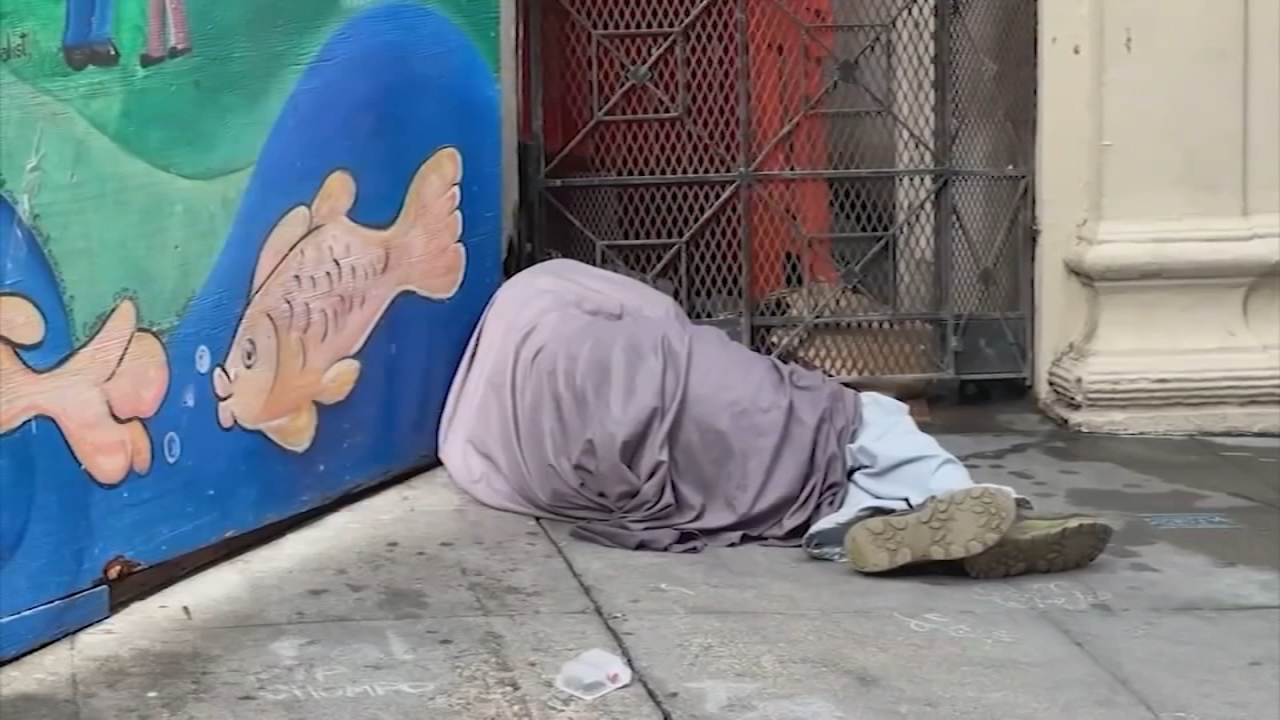
For the first time in more than two decades, San Francisco is changing the way it counts the number of unhoused individuals on its streets.
SAN FRANCISCO (KGO) — For the first time in more than two decades, San Francisco is changing the way it counts the number of unhoused individuals on its streets.
“This is a major change. We’re going from nighttime count to early morning count because we feel we’ll be reaching more people at night people. I was homeless for 18 years. You could never find me,” said Del Seymour, Co-chair of San Francisco’s Local Homeless Coordinating Board.
Thursday’s ‘Point in Time’ count will now happen from 5 a.m. to 10:30 a.m. Historically, it happened overnight.
Another change is that community volunteers will not be involved. Instead, it will only be done by trained city employees and outreach workers. The Coalition on Homelessness sees that as a lack of transparency.
“They’re not allowing any volunteers on the count. And so, they’re relying on city outreach workers, who in our experience, when they did the RV count, they missed 1 in 5 RVs. It means that it’s not open. And you don’t have the observers and the people participatory process that I think is really important to make sure that everything’s going well,” said Jennifer Friedenbach, Executive Director SF’s Coalition on Homelessness.
We sat with Emily Cohen, HSH’s Deputy Director of Communications, who said they made the change to improve visibility.
“We will be identifying vehicles that appear to be occupied and trying to assess if somebody is living in that vehicle. Certainly, if there’s a tent on the street, we make assumptions about how many people are in those tents and try to put together the most accurate picture possible,” said Cohen.
We asked Cohen why volunteers are not part of this count.
“To help ensure consistency and transparency of the count, we are relying heavily on trained outreach workers and city staff to conduct the count,” said Cohen. “Those two groups have always been a part of the count. But in the past, we have had more general volunteers, but we’ve had some training challenges with that in the past, so we’re sticking with city staff and trained outreach workers this year.”
This time around, the city will also conduct a survey that will include questions like “Are you homeless?” and “What led to you being homeless?” which Cohen believes will help ensure an accurate count.
Our data team aggregated the city’s PIT count data and found that between 2009 and 2024, the number of homeless individuals rose by nearly 30 percent.
Some homeless advocates believe the new change is political and could lead to an undercount.
“We’re really worried with, you know, a, you know, political intervention on the count, that there could be a false undercount and we could show a decrease that in reality is not there,” said Friedenbach.
In the Fiscal year 2025 to 2026, the city is projected to get $62.8 million or 7.4% of the total budget from federal sources. The city’s Homelessness and Supportive Housing Department will continue with this method for the next 10 years to build up a strong data set.
“We are working very closely with all of the outreach teams in the city, with city staff to go cover every square inch of the city and county of San Francisco to visually count everyone who we assume is experiencing homelessness,” said Cohen.